
Move or Expand? The Financial Reality for Hudson Valley Families in 2026


If you’ve been sitting at your kitchen table lately wondering whether it’s time to move or finally do something with that cramped floor plan, you’re not alone. We hear this from Hudson Valley homeowners constantly especially families who’ve outgrown their space but love their neighborhood, their school district, and the home they’ve spent years putting money into.
Here’s the thing: in 2026, this isn’t a simple question. The Hudson Valley housing market is expensive, inventory is tight, and mortgage rates aren’t doing anyone any favors. Moving sounds like the cleaner option until you actually run the numbers.
For a lot of families, expanding the home they already have turns out to be the smarter move, financially and practically. So let’s look at what’s actually involved in both options.
The Real Cost of Moving in the Hudson Valley Right Now
People tend to underestimate what moving actually costs. The sticker price of a new home is only part of it.
Transaction Costs
Buying and selling simultaneously means fees on both ends. On the purchase side, you’re typically looking at 2–5% in closing costs attorney fees, title insurance, mortgage origination, appraisal, and property transfer taxes.
On a $700,000 home (which is a pretty average price in Dutchess or Putnam County right now), that’s $14,000–$35,000 before you’ve even moved a single box.
Selling your current home adds more: real estate commissions typically run 5–6%, plus any repairs or staging costs the market expects. If your home sells for $600,000, you’re giving back $30,000–$36,000 in commission alone.
The Rate Problem
If you bought or refinanced when rates were low, you’re sitting on something valuable. Trading a 3% mortgage for a 6.5–7% mortgage on a higher-priced home can add $1,500–$2,000 or more to your monthly payment. Over 10 years, that’s a serious amount of money money that could have paid for a beautiful addition instead.
Moving Logistics
Professional movers, storage, utility deposits, new furniture to fit a different floor plan, painting, landscaping it adds up faster than most families expect. A local move within the Hudson Valley commonly runs $5,000–$15,000 just for the logistics.
None of this means moving is the wrong choice. Sometimes it is the right call. But you owe it to yourself to see the full picture before deciding.
Why So Many Hudson Valley Families Are Choosing to Stay and Expand
When you already own your home, you have something that’s genuinely hard to find right now: a known quantity. You know the neighborhood.
Your kids know their school. You know the neighbors, the commute, where the sun comes through in the morning. That has real value, and it doesn’t show up on a spreadsheet. A well-planned home addition can give you the space you need without giving up everything you’ve built.
You Keep Your Rate
One of the biggest financial arguments for staying is your existing mortgage. Most homeowners who bought before 2022 have a rate they couldn’t get today. Funding an addition through a home equity loan or HELOC means you keep that first mortgage intact and borrow against the equity you’ve built. The math often works better than people expect.
You Get Exactly What You Need
Moving means compromising. You’ll find a home with more square footage but maybe the wrong layout, a smaller yard, or a kitchen that doesn’t work for how your family actually lives. Building an addition means designing for your life specifically: a real home office, a primary suite, a proper mudroom, a family room that’s actually separate from the kitchen. You’re not inheriting someone else’s choices.
You Stay in Your Community
For families with kids in school, this one matters more than almost anything else. Switching school districts mid-childhood is a significant disruption. Staying put and expanding means your kids keep their friendships, their routines, and their sense of stability while you get the home you actually need.
The Property Value Argument
Done well, additions add real value to a home. In a market like the Hudson Valley where demand for quality homes consistently outpaces supply, a thoughtful addition can return a meaningful portion of what you spend — especially kitchens, bathrooms, and primary suite additions, which consistently perform well on resale.
What Goes Into Planning a Home Addition
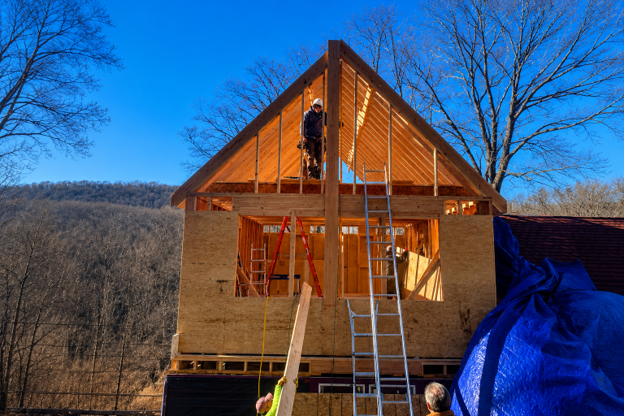
If you’re leaning toward expanding, here’s what the process actually looks like. A good home renovation contractor will walk you through all of this, but it helps to know what’s involved upfront.
Feasibility and Zoning
Before anything else, you need to know what your property allows. Dutchess, Putnam, and Ulster County all have different zoning rules, and setbacks, lot coverage limits, and environmental restrictions vary town by town. Some homeowners discover they have more room to work with than they thought. Others find that their lot or septic system constrains what’s possible. This is the first conversation to have.
Structural Review
Any addition has to work with your existing foundation and framing. A contractor will look at whether your foundation can support additional load, how the framing of a new space connects to the existing structure, and whether any walls need reinforcement. This isn’t scary it’s just part of building something that lasts.
Utility Planning
New square footage means extending your plumbing, electrical, and HVAC systems. Sometimes that’s straightforward. Sometimes it surfaces deferred maintenance or capacity issues worth addressing while you’re already opening walls. Better to know upfront than mid-project.
Design Integration
A good addition doesn’t look like an addition. Matching rooflines, exterior materials, window proportions, and interior flow takes real intention but it’s what separates a home that looks cohesive from one that looks like a box was stuck on the side. The goal is always a home that feels like it was always meant to be this way.
How to Think About This Decision
There’s no single right answer, but there are a few questions that usually clarify things quickly:
Do you love your location and your neighbors? If yes, that’s worth something real.
What’s your current mortgage rate? If it’s under 4.5%, think hard before trading it.
Does your lot have room to expand? A quick zoning check will tell you.
What do you actually need that you don’t have? One more bedroom? A real office? That answer shapes whether an addition makes sense or whether you genuinely need a different type of home entirely.
What’s your timeline? Additions take 6–12 months from design to completion. Moving can happen faster if inventory works in your favor.
If most of your answers point toward staying, it’s worth at least getting a conversation started with a contractor to understand what’s actually possible on your property.
The Bottom Line
Moving might feel like the path of least resistance, but in 2026 it’s rarely the cheaper option. For Hudson Valley homeowners who love where they live, a well-planned addition often delivers more of what they actually want without the transaction costs, the rate shock, and the compromise of buying someone else’s floor plan.
Contact HPM Craftsmen to talk through what’s possible for your home. We’ve helped a lot of Hudson Valley families work through this exact decision, and we’re happy to start with an honest conversation about whether expanding makes sense for your specific situation.
Frequently Asked Questions
1. Is it cheaper to add on or buy a bigger home in the Hudson Valley?
It depends on your specific situation, but for many homeowners in 2026, adding on is the more cost-effective option once you account for closing costs on both ends of a move, the loss of a low mortgage rate, and the reality that a larger home in this market carries a significant price premium. A contractor can give you a realistic addition budget to compare against your moving costs.
2. How long does a home addition take?
Most additions run 6–12 months from design through completion, depending on scope and permitting. A straightforward rear addition can move faster; a larger project with structural work and full system integration takes longer. Your contractor should give you a realistic timeline before you commit.
3. What types of additions add the most value in the Hudson Valley?
Primary suite additions, kitchen expansions, and additional bathrooms consistently perform well on resale in this market. Garage additions and finished basement conversions also attract buyers. The key is quality of execution a poorly built addition can hurt a home’s value rather than help it.
4. Do I need to move out during an addition?
Usually not, though it depends on where the addition connects to the home. Most families stay in place through construction, especially when the new space is at the rear of the home or an upper-level addition. There will be disruptive phases particularly when cutting into existing walls or extending electrical and plumbing but a good contractor will sequence the work to minimize the impact on daily life.
5. What’s the first step if I’m considering an addition?
Start with a conversation about your property’s zoning and lot constraints, then get a rough scope and budget range from a contractor before you commit to anything. That early information usually makes the move-vs.-expand decision a lot clearer.


Comments